
Teen gambling is certainly not new, but uncensored digital access to legal sports betting and virtual video games have blown the doors wide open in recent years. Many teenagers slip through weak age verification checks, or they secretly log into adults’ accounts. Sports betting lives inside Grand Theft Auto loot boxes and in-game FIFA packs, and it’s showing up in kids’ social media feeds, too.
Even the largest sportsbook sites that have the most robust Know Your Customer(KYC) protocols can’t stop kids from finding loopholes, and if teen gambling can bleed into those intensely secure platforms, everyone is at risk. Have you checked up on your age verification software lately? As gamblers of any age like to say, we’d bet a nickel that underage sports betting is happening right under your nose, even if you’re sure you’re operating strong proxy detection and dominating KYC.
Why Parental Awareness Feeds Underage Sports Betting

Unfortunately, parents are often unaware of their children’s online behaviors, or they underestimate how addictive the act of wagering and winning can be. Some might overestimate how responsible their child is with technology. Only a small percentage actually believe their teens are betting online, meaning these kids are lacking the parental awareness and guidance they desperately need to stay safe.
The House Always Loses When Regulators Come Knocking
Sure, we’d all like to protect minors from the harsh realities of life, but as a sportsbetting business owner, your primary concern is keeping your company afloat. While it can be tempting to cross your fingers and hope your KYC due diligence is bulletproof or that regulators won’t notice teen gambling on your platform, we’d like to remind you of a few relevant recent events.
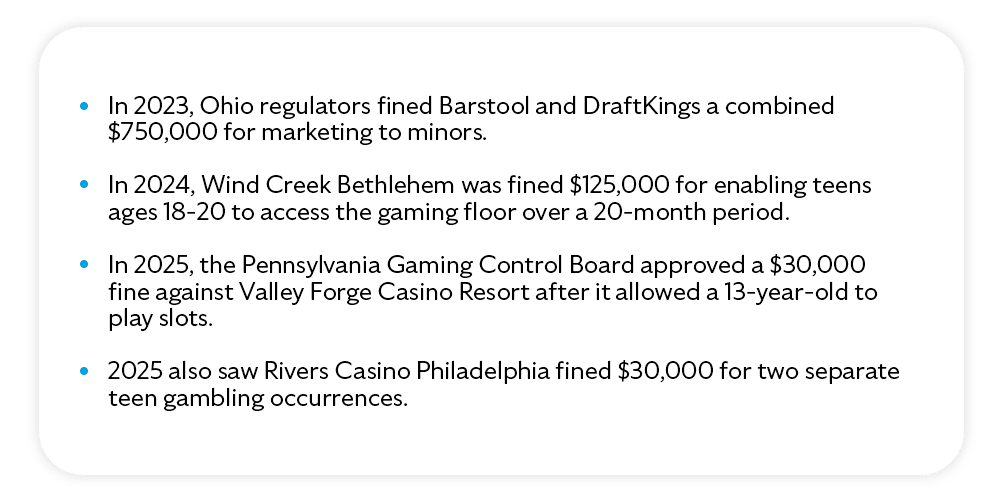
No one is immune from teens trying to infiltrate betting platforms, just like no one is protected from the consequences that follow. If teen gambling shows up on your next business audit, you’ll be staring down the barrel of heavy fines, suspended licenses, legal sanctions, confiscated funds, and reputational damage.
KYC for Minors: Identifying Teen Gambling Before It Starts
We’re all familiar with traditional KYC protocols, but how can drivers licenses and PEP lists be screened for someone who isn’t even old enough to vote? To really unearth teen gambling, your betting platform needs a specialized verification process called KYC for minors, which requires individuals under the age of 18 be validated by both their own identity documents and their legal guardian’s credentials. In essence, KYC for minors stops teens from using fake, stolen, or borrowed IDs to create accounts, it stops them from sneaking behind their parents backs, and it stops you from breaking the law.
How EVS Keeps You Safe: AssureAge Verification & Other Teen Gambling Solutions

There are multiple steps your platform can take to guard against teen gambling and its fallout, and our EVS solutions are key. Through our signature, cloud-based BlueAssure platform, we can use risk scoring to analyze your customer data against thousands of sources to identify potential fraud as it’s occurring. Mismatched identities and fraudulent addresses are flagged, enabling your business to take immediate action.
AssureAge is our front-line defense against teen gambling. We actually designed it specifically for age-restricted industries like online gambling and sports betting. Here’s how AssureAge works. Within seconds of a user inputting their credentials, our system can:
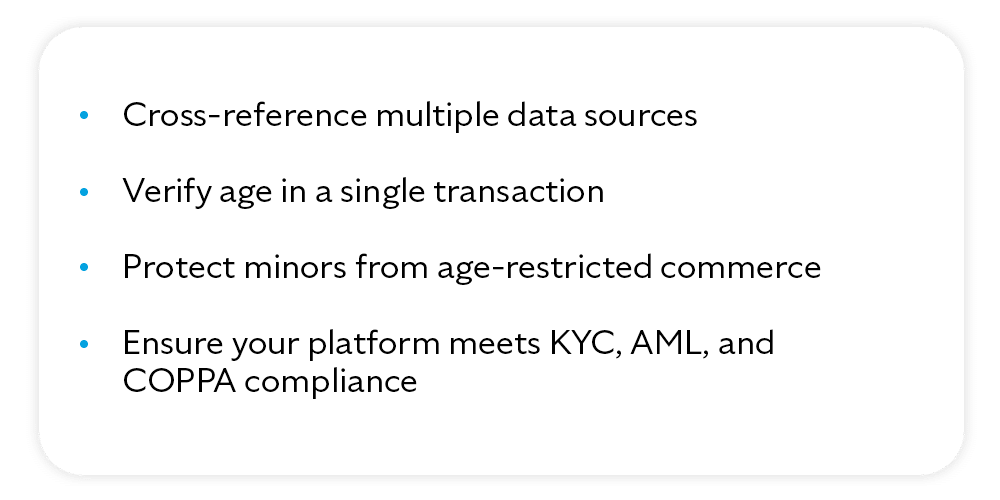
Other solutions within our BlueAssure suite can build your walls against teen gambling even higher. For example, if kids are leveraging VPNs to mask locations or enable proxy betting, our AssureLocate service provides real-time proxy detection to instantly flag and block attempts at location spoofing. We can also utilize biometric facial recognition technology to ensure a registering user is an adult. Interested in discussing these or other EVS defenses against teen gambling? Contact us for a free demo of our products.